






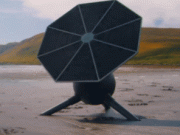

Robots have been doing backflips and other fun moves for a while now. Companies use that to promote their latest humanoids and robot dogs. Teaching robots to pull off extreme moves is easier said than done though. OmniXtreme is a general policy for these types of motions. It enables robots break dance, maintain balance in extreme situations and perform consecutive flips. As this video shows, a Unitree G1 robot can be taught to perform backflips, cartwheels, and high speed flips and kicks.
You might have seen the WuBOT performing at the 2026 Spring Festival Gala; however, most high-dynamic extreme motions you see are executed by overfitted tracking policies. Until now, training a unified policy capable of performing various extreme motions with a high success rate… pic.twitter.com/BToZ29rD33
— Siyuan Huang (@siyuanhuang95) March 2, 2026
Researchers achieved this by decoupling “general motor skill learning from sim-to-real physical skill refinement. [using] a flow-matching policy with high-capacity architectures to scale representation capacity without interference-intensive multi-motion RL optimization, followed by an actuation-aware refinement phase that ensures robust performance on physical hardware.” This approach enables robots to perform extreme moves without collapse in tracking fidelity when motions are varied. You can read the paper here.